

Vertical Software
Vertical software is software designed for a specific industry or profession. It typically includes industry-specific workflows, interfaces, data types, and reporting tools. Cloud-based versions are sometimes called vertical SaaS.
Examples of vertical software include electronic health record systems for healthcare providers, case management software for law firms, property management software for real estate companies, and POS systems designed for restaurants. These applications provide specialized features that are not typically included in general-purpose software.
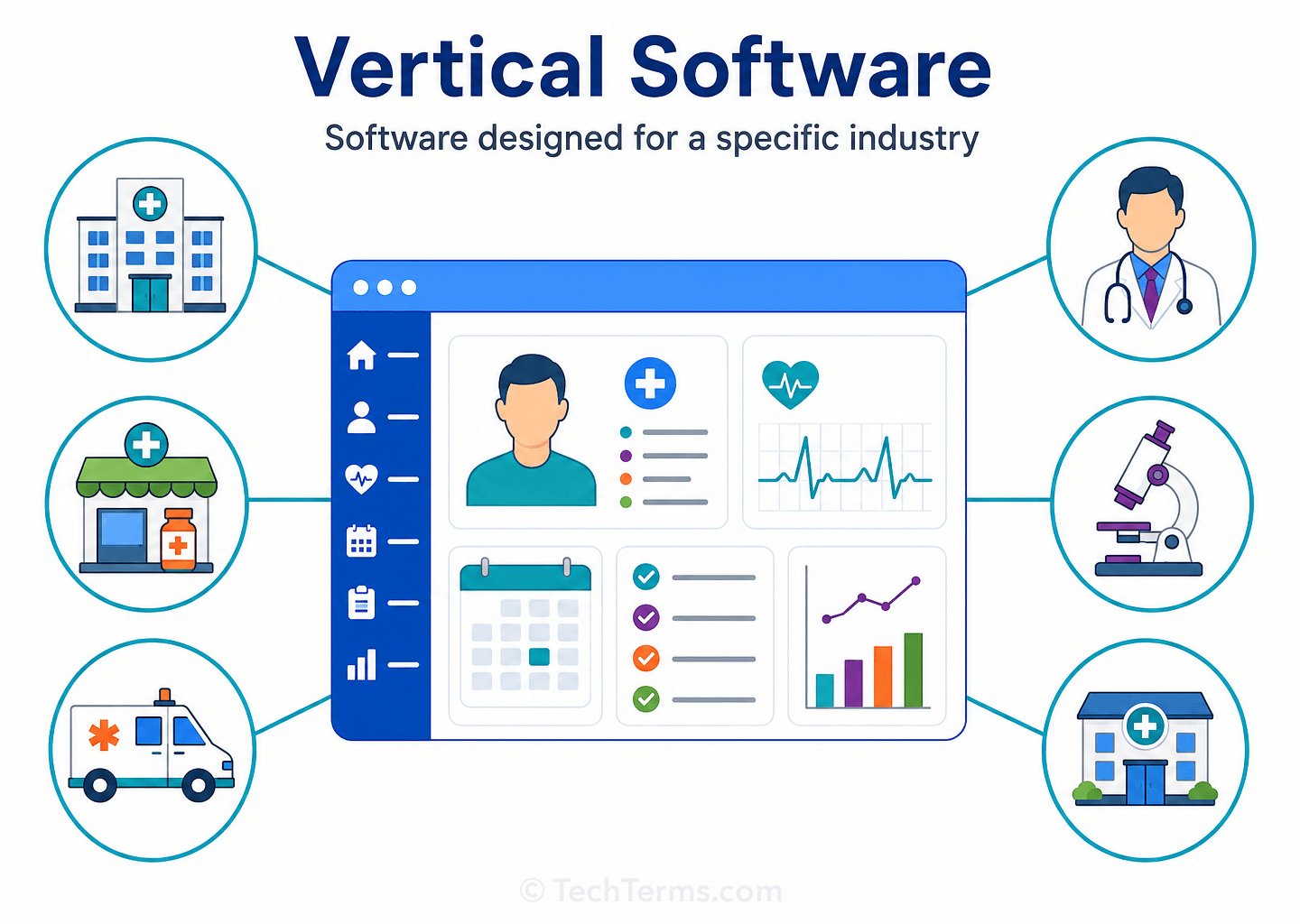
For example, a healthcare application may manage patient records, appointments, prescriptions, insurance claims, and regulatory requirements. While a general database could store some of the same information, it would not provide these healthcare-specific functions without significant customization.
Vertical Software vs Horizontal Software
The opposite of vertical software is horizontal software, which is designed for use across multiple industries. Because vertical software serves a narrower market, developers can tailor it closely to their customers' needs and may face less direct competition. However, they also have a smaller pool of potential customers and must keep the software aligned with changing industry practices and regulations.
NOTE: Vertical software may also be called "vertical market software," though the longer term is less common today.
 Test Your Knowledge