Toslink
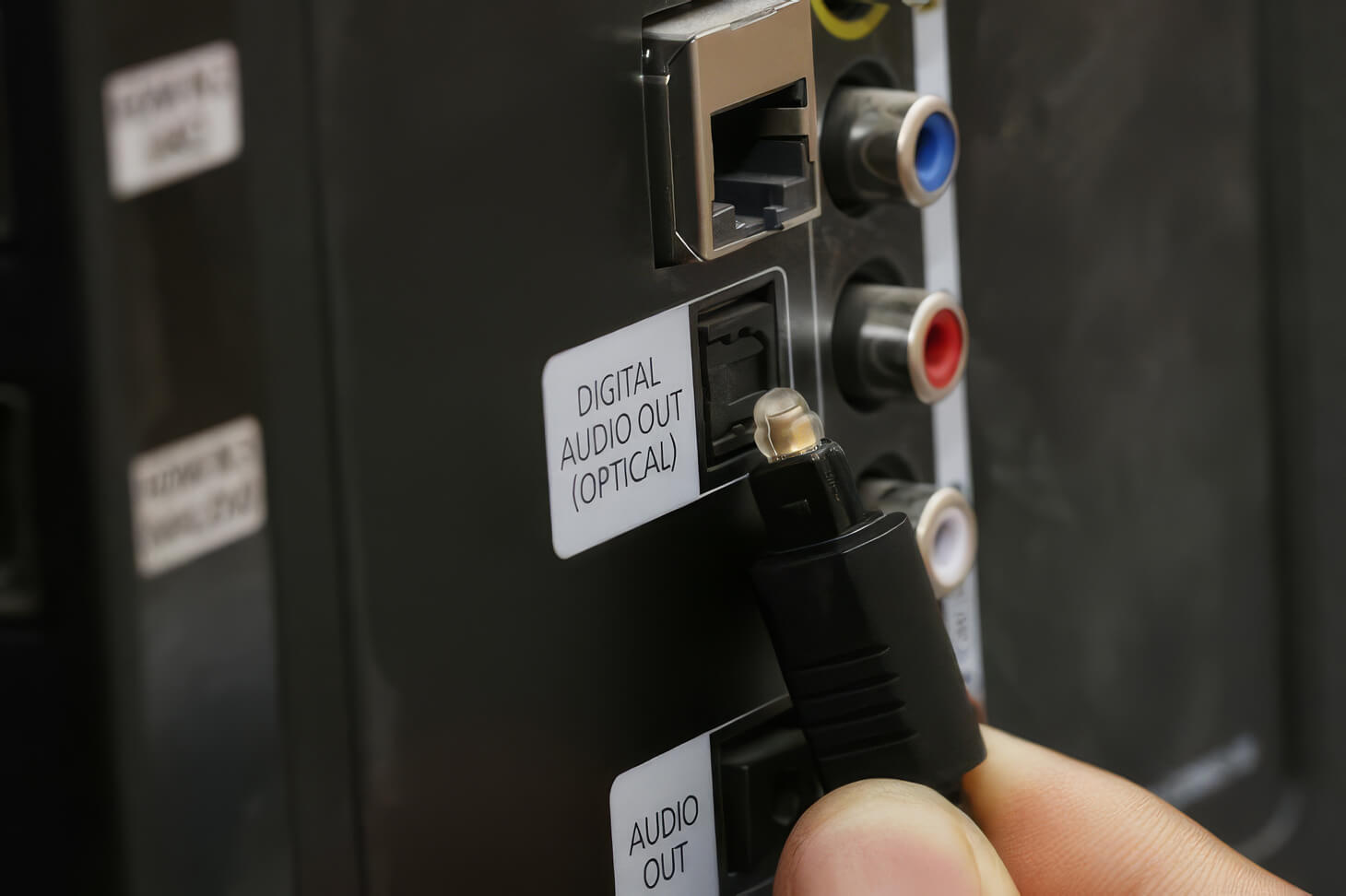
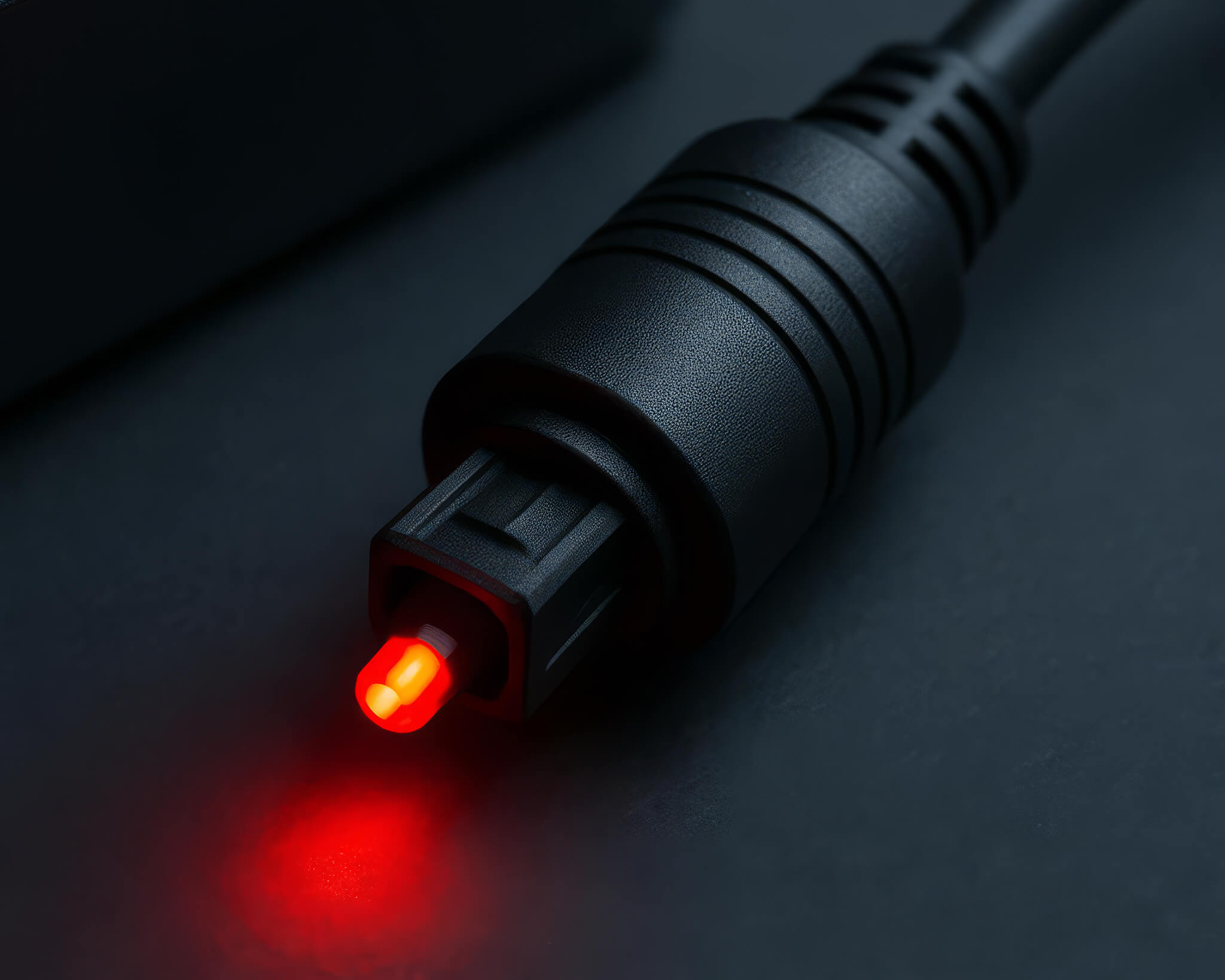
Toslink (pronounced "toz-link") is a digital audio connection standard that transmits sound using pulses of light through a fiber optic cable instead of electrical signals. The name comes from Toshiba Link, since Toshiba developed the technology in the 1980s. Toslink connections are commonly used to send digital audio from devices such as TVs, soundbars, game consoles, CD players, and AVRs.
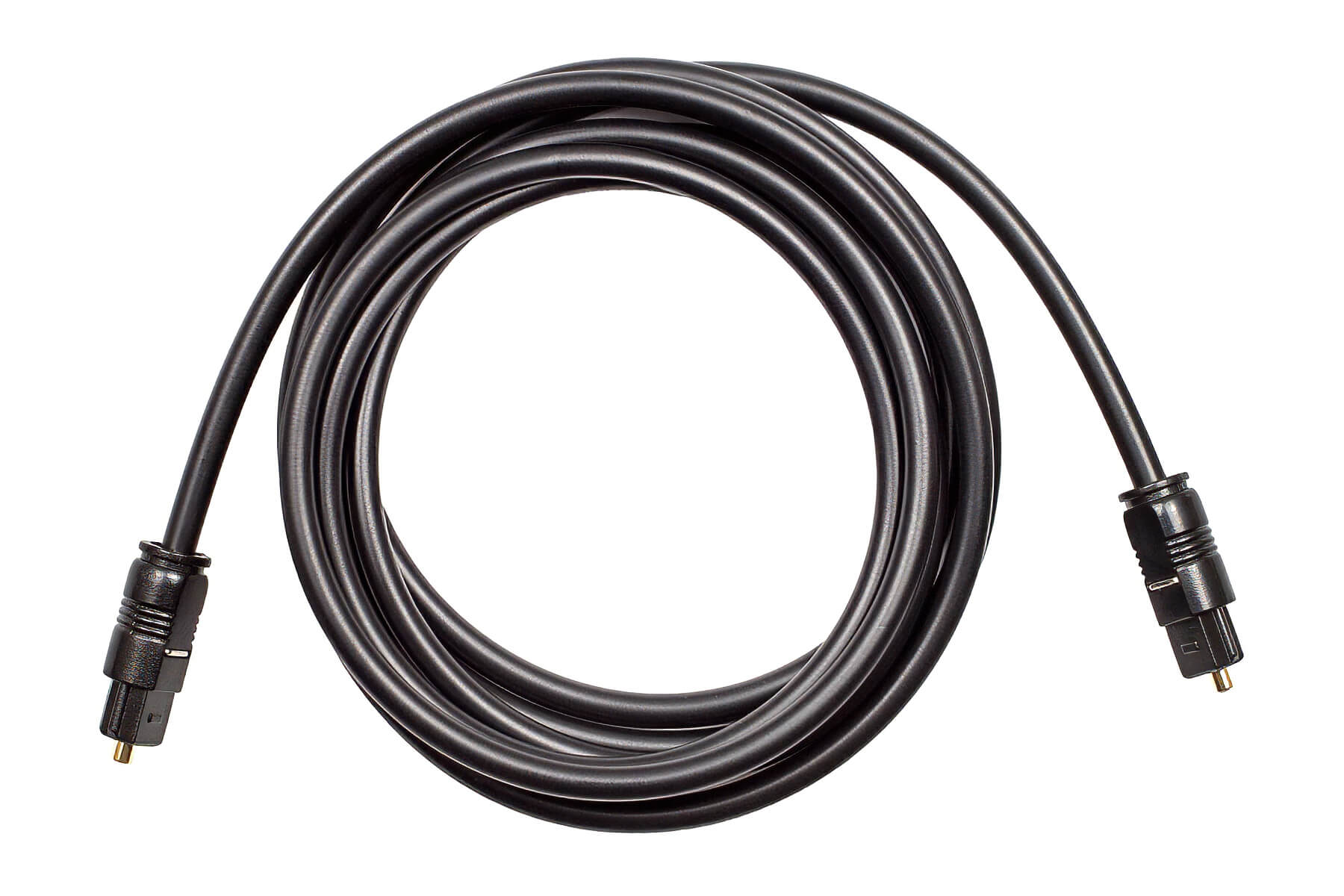
Because Toslink uses light rather than copper wiring, it is immune to electrical interference, which helps preserve audio clarity. A standard Toslink cable has square connectors with a small protective tip and plugs into an optical audio port, often labeled Digital Audio Out (Optical) or S/PDIF.
Toslink Limitations
Toslink is ideal for transferring uncompressed 2-channel stereo audio, but it lacks the bandwidth to carry an uncompressed surround audio signal.
Toslink supports:
- Uncompressed 2-channel PCM stereo (left+right audio at full digital quality)
- Compressed multichannel surround audio, such as Dolby Digital (5.1) and DTS (5.1)
Toslink does not support:
- Uncompressed 5.1 or 7.1 PCM
- Dolby TrueHD
- DTS-HD Master Audio
- Dolby Atmos (except when Atmos is embedded in compressed Dolby Digital Plus, which Toslink may still not pass reliably)
Toslink is often associated with the S/PDIF standard, since most optical audio ports use Toslink connectors to carry S/PDIF digital signals. While newer systems often rely on HDMI for surround audio formats, Toslink remains useful for connecting older audio equipment and for simple digital audio links where video is not needed.
 Test Your Knowledge