

System Resources
System resources are the hardware and software a computer uses to run the operating system and applications. Hardware resources include the following:
- CPU - the central processing unit
- GPU - the graphics processing unit
- RAM - system memory
- storage space - such as a SSD or HDD
- network connectivity - wired or wireless networking
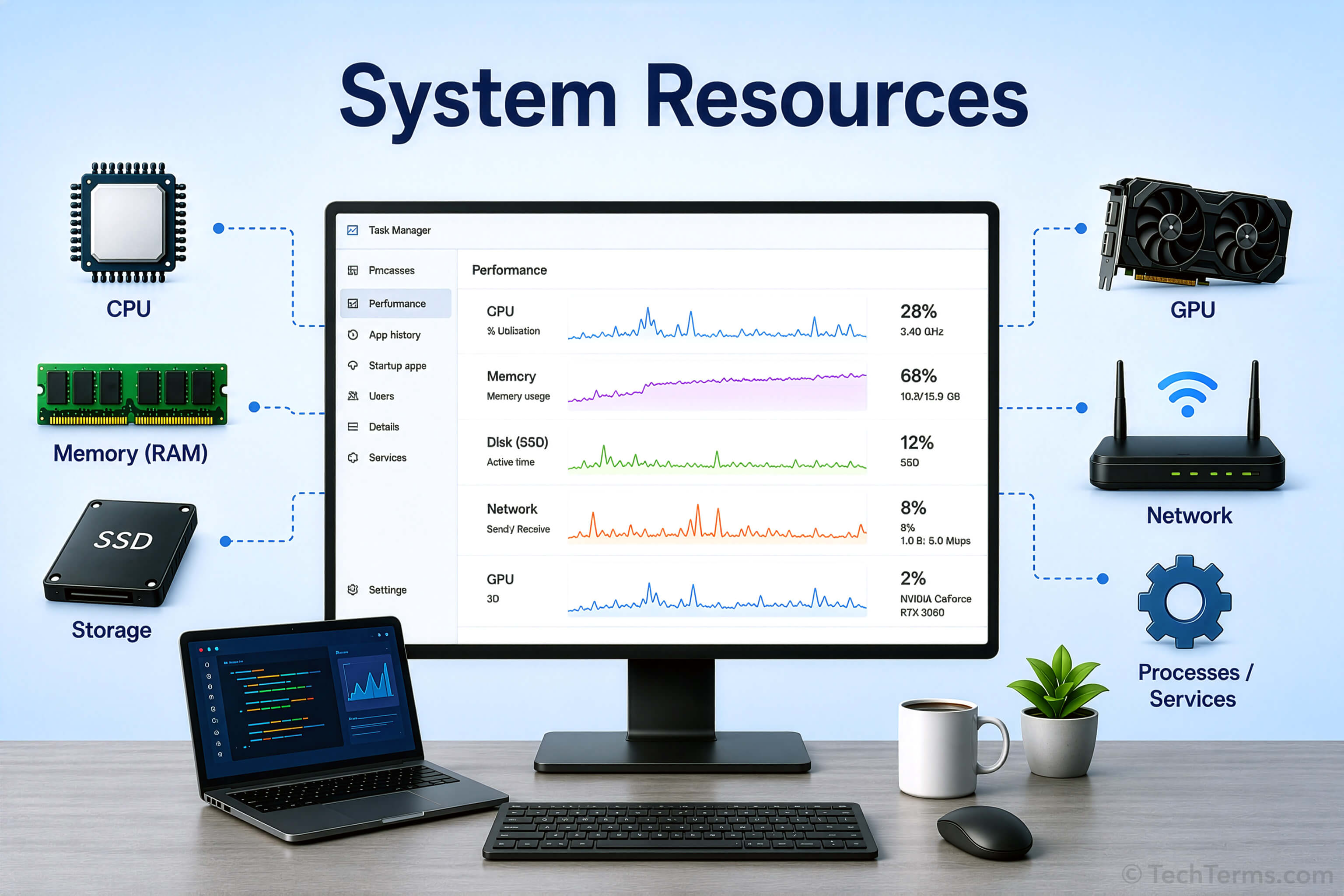
When system resources become limited, your computer may slow down or become less responsive. For example, each time you open a program, it uses some amount of memory and processing power. A web browser with dozens of tabs open may consume several gigabytes of RAM and increase CPU usage. Video editing software and modern games often require a significant amount of GPU resources. If too many programs are running at the same time, your computer may run into a resource bottleneck, causing apps to lag or even crash.
Monitoring System Resources
Modern operating systems include built-in tools for monitoring system resources. In Windows, the Task Manager displays CPU, memory, disk, network, and GPU usage in real time. macOS provides similar information in the Activity Monitor utility. These tools can help identify programs that are using excessive resources or slowing down the system.
Software Resources
The term "system resources" may also refer to software resources required by a program, such as system files, drivers, fonts, or shared libraries. If a required resource is missing or corrupted, a program may fail to launch or display an error message indicating that necessary system resources could not be found.
 Test Your Knowledge