

ISA
Stands for "Industry Standard Architecture."
ISA was an early expansion bus used in personal computers to connect additional hardware, such as video cards, sound cards, network cards, and serial or parallel port adapters. These expansion cards were installed into long ISA slots on the computer's motherboard.
The original ISA bus (introduced in 1981 as the "IBM PC bus") was 8-bit and used a 62-pin connector, operating at a clock speed of 8.33 MHz. The 16-bit version of ISA (introduced in 1984) extended the original slot with an additional connector, bringing the total to 98 pins. The 16-bit bus increased data throughput while maintaining the same clock speed.
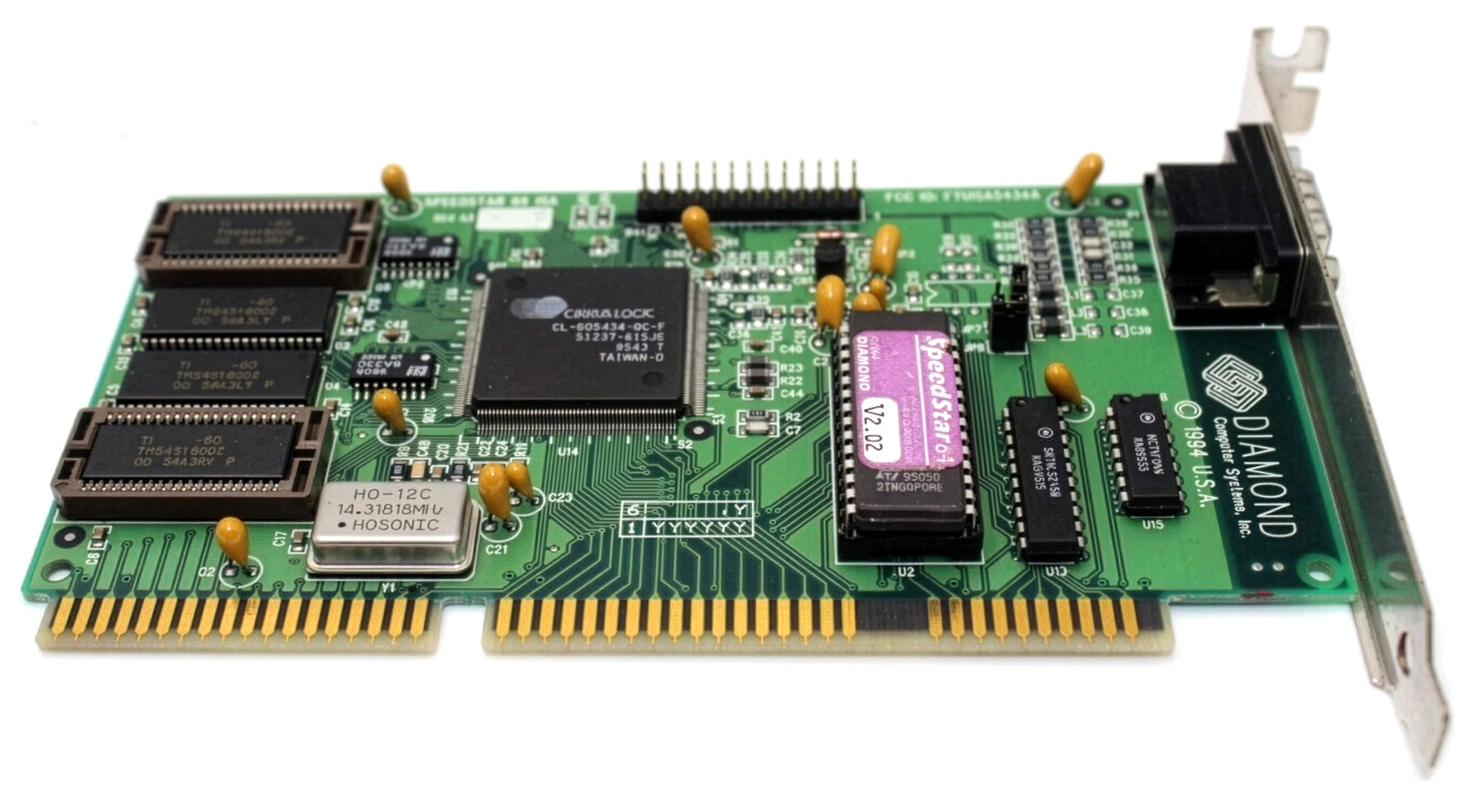
ISA originated in 1981 with the IBM PC Model 5150 but did not become widely adopted until 1984, when the 16-bit version was released with the IBM PC/AT. During the late 1980s and early 1990s, competing expansion bus standards such as MCA (Micro Channel Architecture) and VLB (VESA Local Bus) emerged, but ISA remained the most common standard due to its broad compatibility and low cost.
By the mid-to-late 1990s, computer manufacturers began phasing out ISA in favor of faster and more flexible buses such as PCI and AGP. Today, ISA slots are considered obsolete and are no longer found on modern computers.
 Test Your Knowledge